NANO to the rescue of NAMO

The decision of Tatas to shift the Nano Car project to Gujrat  after the bitter experience at West Bengal has given an opportunity to the State to  have some good cheer  for the festival  season. The Modi Government which has been facing international criticism for it’s human rights violations and for it’s insensitivity to plight of population displaced by ambitious developmental projects has seized the god sent (or Mamta sent) opportunity to tout this development as a tribute to State’s investor friendly climate. So much is the feeling of elation that some fans of Narendra Modi find the similarity between his abbreviated name  (NAMO) to NANO rather exciting .

The State does deserve substantial credit for having facilitated this quick transfer due to decisive abilities of it’s CM. The fact that the State was able to quickly start the process for acquisition for land required for approach roads and it’s ability to mange the same without protest from the affected farmers speaks for it’s management techniques.

IPL DLF T20:Chennai Super Kings March into finals

The tame surrender of Delhi Daredevils in their semi final encounter with Shane Warne’s Rajasthan Royals team ensured that the final of IPL DLF T20 tourney would be a battle between the Royals and a king’s taem –either the Chennai Super Kings or King’s XI Punjab. But the 2nd semi final between the two teams with claims to Kingdom on Saturday evening was hardly the battle royale which one had expected . The CSK marched into finals rather effortlessly without any anxious moments.

King’s XI won the toss and decided to bat .The first ball of the match was posted to boundary   and the audience anticipated a thrilling encounter. The excitement was however short-   lived .Kings XI batsmen , soon started a march back to the pavilion with six wickets down for   45 .While Preity Zinta’s cheerful face slowly lost the smile as Yuvi returned to pavillion out for   3 caught by M’Daran of Gony there was a feeble sign of fightback till the seventh wicket was down for 63. The Maratha warrior Powar then took charge of the proceedings for the Punjab King .The highest partnership of the innings yielding 35 runs came off the bats of Mota and Pawar . Powar’s 28 off 21 balls which included one 6 and four boundaries was highest for the side. Lustily hitting round the wicket with a six and two fours of consecutive balls he helped the team to reach certain respectability at 112/8. Only two batsmen could get to double figures.

The bowling honours were shared between Natini, Morkel and Gony with two wickets each. M’Daran getting the wicket of Chawla. Irfan Pathan was run out when he failed to back up after an abortive run. The most economical bowling figures being that of Gony 2/14.

Set up the target of 113 runs CSK opened in stylish fashion with Parthiv and Vidyut who electrified the proceedings with 14 runs coming of the two opening overs from Irfan & Srisanth. In middle of     3rd over Vidyut parted ways with Parthiv returning to pavilion. Thereafter the Chennai     Jauggernaut rolled on effortlessly . The fifty came off 8 overs with the solitary loss of wicket.     Raina hit a brilliant six off Yuvi to push up the run rate. Midway down the street the CSK were     cruising at 66 at the end of tenth over.  While Sreesanth, Powar and Irfan sweated it out, Rain     and Patel continued regular hits to the boundary. After Raina ‘s massive six off Irfan 100 of the innings came in the 14th over and nothing much was thereafter left to be done. Patel reached his second fifty of the tournament shortly.I t was the last boundary from Raina in the next over which sealed the match in favour of CSK. The partnership between him and Patel for the 2nd wicket  yielding 102 runs.

While Raina with 58 runs  was the best bat for Dhoni’s side, Irfan was the lone wicket taker for the bowling side with most economical figures (24 runs in 4 overs).CSK won with 9 wkts and five overs to spare.

IPL DLF T 20:The highs and the lows of the tournament

IPL DLF League T 20 tournment will be at last reaching the last four stage with completion of 56 matches in next week. The league matches saw ups and downs in fortunes of teams and the men who gallantly fought for the respective sides .The march up to the semis has not been without some controversies as well as some hilarious developments. The first controversy interestingly related to a non sport event. The cheer girls from foreign soil hired at a huge cost were the first target of criticism for the outfits which some found against our cultural heritage. To add to their sorrow a famous film star dubbed them as “nachaniya” (dance babes). The girls however hardly lost any cheers and adorned some extra covers to their eye catching costumes to silence their critics.
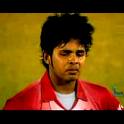
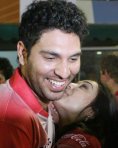
A more eye catching incident followed in shape of teary eyed Sreesanth caught on camera. We learnt that the eye flue like condition was in fact the after effect of Harbhajan Singh’s slapping of young paceman after a match which his team Mumbi Indians lost to Sreesanth’s team. The slap cost Bhajji a five match ban and loss of match fees in approximation of Rs.2.5 Crs.

While the tournament was still recovering from the slap effect and baby Sreesanth’s tears had started drying up , the media started another whisper campaign about emotional response of a team franchisee about selective hugging of good performers based on their nativity. The allegedly class based welcome invited sarcastic responses. The bewildered franchisee thereafter had to contend the team members with a toned down welcome note on return to pavilion after a good knock.
And then came the booze baron’s bombshell. Vijay Mallya the franchisee of Royal Challengers a consistently losing team openly challenged the management potential of his CEO Charu Sharma and blamed him and captain Rahul Dravid for having instigated him into buying a vintage collection of players which turned out to be without any fizz. His choice of the second costliest team, appeared to be chasing victory like the elusive kingfisher as the team remained at second lowest place in the standing on match points. A volley of protests followed .

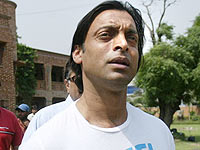
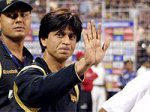
As the dust and din was settling, another dusty rider arrived in shape of Shohaib Akhtar the banned but bailed Pakistan pacer. While everyone thought as to why the guy was sweating so much, some Paki newspapers planted a story of 36 syringes allegedly seized by custom authorities from his bag. While the charge was not found to be correct yet it ushered in dope tests which were to be done randomly. Knight riders then found themselves mired in a controversy spun around their franchisee Shahrukh Khan’s mixing too much with his bunch of knight riders. When anti corruption staff (??) checked his intrusions in player’s area King Khan aggressively protested and also dispatched (leaked to media) an adieu SMS to his team announcing his withdrawal from the playfield till “he learnt rules of the game ” (completed bollywood commitments ???) . The organizers had to come down with systematization of the process. But by that time Dada’s gang already appeared to be riding into the sunset notwithstanding the support from the faulty and fading lighting system at Eden Gardens.
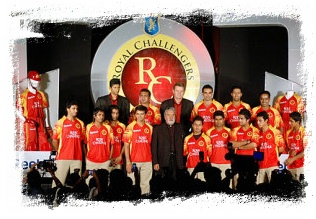
(With Thanks to IPL site for the Pics)

The T20 brand -elusive for Dr. Vijay Mallya

The recent entry of liquor baron Vijay Mallya in the field of Cricktainment known as DLF IPL League has generated some comic confusion, an activity which has been the hall mark of Mallya’s style of functioning. The business tycoon whose name figures two steps ahead of the magical figure of 666 in the Forbes list of billionaires is known for his eat drink and enjoy lifestyle (if you can afford it). Having inherited a conglomerate of motley companies at the age of 28 years Mallya’s fortunes climbed steeply in course of next two decade to make him owner of some of the most sought after territories in liquor trade. But it has also brought in public domain his confusing and contradictory approach to issues of consequence.

Dr. (?) Mallya true to his spend thrift image purchased ( or assembled) the second costliest team ($111.6 millions) of Indian cricketers in the IPL T20 tournament. The Ragged Mallya Challenge It seems that the business baron who proudly acclaims (when you board the Kingfisher aircraft and switch on the mini TV set) that every airhostess in his Kingfisher Airlines has been personally selected by him to treat the passengers as his personal guests was a bit indiscreet this time since his golden team did not display similar devotion to the cause of it’s master and seems to be gravitating towards the bottom of the pit under it’s weight . Mallya reacted promptly and sacked Charu Sharma “CEO” of the team- a commentator whose adornment with this corporate style assignment was decision of Vijay Bhai himself. Dr. Mallya as expected is trying salvage some part of his reputation as producer of world famous liquor brands and breeder of winner race horses with the information that he had left the selection to Chru and Rahul Dravid who selected a test team instead of a team suited for the abbreviated version of the game. Later when another team member Anil Kumble came out in defence of captain Rahul Dravid, Mallya further backtracked and came out to defend team coach.The team despite the changes and fire fighting efforts continues to loose.

Mallya watchers would however contest his contention and recall that he is a man who is inconsistent even while reporting his family roots .While the Wilkipedia reports his place of birth as some obscure town in Karnataka and Calcutta as his place of education, Mallya in an interview to journo Anjali Rao given at his Kingfisher Villa (is it not encroaching on Coastal Regulatory Zone ???) at Goa keenly painted himself as a Goan apparently to reinforce his colorful image. Mallya hardly known for any philanthropic projects, once reported to have spent Rs.1.5 Crs. to purchase a sword belonging to Karnataka warrior king Tipu Sultan in a Sotheby auction at London , for restoring the sword to the motherland. However strangely his wife and family contrary to his patriotic leanings remain ensconced in USA as their home place . About the doctorate which adorns his name, there are apprehensions that it is from a disputed source.

While the blogs promoted by his group rightly praise his genius as a business man , there is a only a subdued reference to his disastrous performance at another sunken ship -the long forgotten Janata Dal of which Mallya is president apparently even now. Having taken over the mantle of Janata Dal President from Subramaniam Swami in the year 2003 he fielded candidates for 20 (unlucky no. for him?) seats for Karntaka Assembly elections. Unfortunately his choice of candidates at that time was total failure since every one from his party lost.

What Dr. Mallya perhaps needs to understand is that while the selection of horses , hostesses and hot calendar models can be made on visual appreciation of certain features , selection of a sports team or political representatives for an election campaign requires tactical skills and intellectual proficiency of a different nature. There are other investors also whose teams are not that successful but they are not complaining because a good businessman should also have a good shock absorption mechanism and in difficult times should wait for the tide to turn.

Quitting the govt jobs :Is the grass really pale on this side

A few days back I came across a very beautiful post in Blogbharati on choice of civil services as a profession, articulating the reasons which make the services a continuing source of attraction for so many young men and women. Not long back there was another interesting article in a leading magazine on a similar subject which on the contrary indicated that a number of former civil servants were moving over to jobs in private sector since they found such jobs much more attractive and satisfying . The former civil servants now stylishly photographed in their Corporate environment were at pains to explain as to how they were now able to give output which was several times higher than what they could deliver in their previous assignments, which they found to be suffocating ( and managed to survive in the suffocation for several decades !). The two conflicting pictures need to be looked into carefully in order to ascertain as to which of the two is closer to reality.

One important information which one could make out from the article on exodus of civil servants was that the number of such senior officers was in the range of not more than two dozen in a year. Out of the massive strength of civil servants in various government jobs the departure of a handful of senior functionaries in a year hardly merits the type of sensational and glossy coverage which the media bestowed on these ex bureaucrats. Was it an impromptu attention of some serious journalist to this issue (which has little relevance or interest for majority of the readers) of social behaviour or something akin to behaviour of IPL cheer girls (who are paid for show of excitement irrespective of the stature or parentage of the players involved) will remain an issue to be pondered with.

Another important issue which calls for attention is whether the process for selection of these senior civil servants to private sector jobs was transparent and open to all others with similar experience and seniority. No doubt these civil servants while holding senior posts must have ensured that all recruitments to public services under respective departments were made through fair and transparent process .Can they say with certainity that their own exodus from civil services was preceeded by a similar exercise, or the selection process merely zeroed down on an officer who was earlier accquaintance of a corporate entity or business house.

Also, the information that substantial number of such bureaucrats were absorbed in infrastructure related companies , for which the ability to closely network with reltaed agencies including govt departments is a key job requirement , makes the situation a bit complex. Further if the challenges and opportunities to perform in Govt service are so limited and poor then what could make these officers who spent a lifetime in such inconsequential jobs , so valuable in the estimation of their new employers ? Is it their professional competence or their proximity to bureaucratic circles which constitute their ESP in the eyes of private sector employers ?

Perhaps these are uncomfortable questions which the ex bureaucrats would find unjustified on the ground that it is their personal life and career and others do not have a right to suspect their abilities or the compelling needs which prompted their new employer to call them to their service. Questions of this nature may also be considered as reflective of frustration on part of those who could not make to the Al dorado.

As civilized civil servants others may accept this argument in honour of departed senior colleagues. But one request that can be made to them is to not to belittle the civil services or present a gory picture of the scenario in order to justify their departure.

They know it well that the scenario is not as bleak , if we take into consideration the fact that we are still a nascent democracy and various social forces are still to come to a state of stable equilibrium in our management set up . The challenges before the administrators are complex, involving human beings and behavioral patterns with various conflicts within them. The country is struggling with modern administrative concepts like e governance and it will be some time before fruits of modern technology will be suitably harnessed to make the life better for common man.

We are ahead of many other countries but still have a long way to go. Till then we need pooled efforts of young and old in the civil, police and allied services to contribute in what ever humble way they can within this complex and sometimes oppressive structure. For every deserter there are thousands who know this truth and feel proud of their jobs. They may be allowed to continue without distraction and interference because the country needs their services.

Sanju baba in trouble again

Marriages are said to be made in heaven but an act of indiscretion or shall we say an unfortunate slip in compliance with law has lead to unmaking of a marriage of two stars of the earth. The much hyped marriage between Sanjay Dutt and his friend now known as Manyata (meaning recognition) appears to be unrecognizable as per law of the land. It has been discovered that the stars submitted false evidence in support of their proof of residence in Goa and thus the registration of the marriage is held up by the Registrar of marriages. The Govt functionaries who facilitated the submission of false certificates are facing disciplinary action for facilitating the an act of forgery.

It is not known as to what prompted the two film personalities to decide to get married at Goa . Perhaps Sanjay being ignorant of legal impediments and encouraged by some over enthusiastic goan lawyer friend unwittingly allowed himself to be caught in a legal wrangle of his own making. Having just temporarily managed to extricate himself from imprisonment in a criminal case relating to possession of unlicensed AK-47 gun and then getting it destroyed to conceal the evidence, he seems to be heading for another troubled phase in life due to the latest development. To add to his trouble now an ex husband of his lady love who claims to be not properly delinked from his marriage to her is also sending signals from his prison cell about illegality of the whole show.

If the marriage was planned in Goa to make it a secret affair or to escape the demanding ex husband, the move seems to have badly misfired. Media would always be happy if a marriage goes on rocks in comparison to a case where it is over peacefully and away from media glare.

Moreover in our country we have different standards for compliance with law for different social categories. While a politician living in Delhi can claim to be a resident of Assam for facilitating induction in the Parliament, and another one can remain a member of Parliament despite persistent controversies surrounding her nationality , others must not tinker with law. Remember, Delhi Police accused of gross negligence and fabrication of evidence in the Jessica Lal murder case went all the way to Goa for arresting socialite Bina Ramani on charge of giving a false address in her ration card !

It is sad to see Sanju Baba , son of such respected parents finding himself in such embarrassing situation while trying to seek a settled lifestyle, but February 2008 seems to be the month of falling satellites, having gone out of orbit due to calculation errors , perhaps a watchful astrologer could have forewarned the two stars.

Marginalise and Kill : The Politics of Raj

Sare jahan Se accha Hindostan hamara. Hum Bulbulein hain iski yeh gulsitan hamara. ( Our loveable Hindustan is above all others in the world. We are it’s singing birds and this is our garden) . This is how poet Iqbal described India before independence and partition. After independence from the British Raj, the Indian Constitution framed by politicians brought up with such liberal and romantic ideas gave us a free nation which bestowed on all citizens unfettered rights to freely move and settle in any part of the country.

Encouraged by this liberal constitution and newly found freedom the post independence era brought about a great intermingling of it’s people . Our great cities at one time took pride in being labeled as cosmopolitan in nature or sometimes being called a mini India. The south Indian Idly Dosa cuisine found it’s way to each north Indian eating joint and south India in turn felt proud to have a “ Shere Punjab” Hotel in every nook and corner of major metro cities. The Kathak dancers of Lucknow performed to fully packed auditoriums in Goa and the Hindi Cinema anchored at Mumbai established as a million dollar industry with the participation of Kapoor Khandans of Punjab. Considered as the heman of his times actor Dharmendra fell to the charms of South Indian belle Hema Malini and Masoor Ali Khan Nawab of a princely State in Punjab found solace in marriage with an actress of Bengali origin.

But the happiness and enjoyment of the newly born nation in creating a multidimensional social fabric was short-lived. The political leadership which in post independent India found itself overwhelmed with the task of nation building and in turn felt threatened for survival due to lack of imaginative problem solving capabilities reinvented the politics of divide and rule . The desperation and frustration, infact painted the obnoxious agenda with much sinister colours . The agenda got upgraded to marginalize and kill.

The new trend of political one-upmanship is leading to an astonishingly grim scenario . Firstly it was a war between north and south later on we narrowed down our boundaries and developed hatred for natives of all states other than our state . Majority of states now have some grouse with the neighboring state. Process of free flow of human beings across the state borders is considered as an invasion for financial exploitation. Each state has it’s own database to explain as to how business men and jobseekers from other states are choking the sons of soil in their states. Migration is considered as an act of crime to enjoy hard earned economic benefits of the other state. With every passing day the boundaries are shrinking further , now it is a question of culture being confined to cities.

So while Mumbaikars may enjoy their New Yea’s eve in Goa but the north indian taxi driver who ferried them across the border for enjoyments may get mashed up by Shiv Sainiks on return for not belonging to Mumbai ! In not too distant future a railway train running from one end of the country to other end may carry only dead bodies of passengers at the last stop because people of each state (or city?) would attempt to eliminate those passengers who are aliens i.e. from other states or cities.

Who said that the Raj is dead it has emerged in a new avtar.

Team India shines

Mother India has something to be proud of. A fighter for national pride nicknamed Bhajji , a member of Indian cricket team presently touring Australia has established that he is not one who believes in insulting the racial pride of any human being. He has admitted that certain words uttered by him during a cricket match between India and Australia were in fact intended to be simply abusive in a routine sort of way since the words only referred to the anatomy of victim’s mother rather lecherously and nothing else. Bhajji’s mom heaved a sigh of great relief that his son had not called the foreigner by the name of an animal but was only being vulgar towards another woman. Newspapers carried photographs of young girls in his native territory celebrating this victorious turn of events by carrying playcards “Chak ditta India” a much abused term which translates into something like“India you rammed them”.

The watchgaurds of national pride frothing with tension through out the whole week over the dispute between the players stood vindicated by virtue of a victory scored in the court of enquiry. The dispute had taken an ugly turn after Bhajji was banned from playing next five matches after a summary trial. It ended in our favour after his clarifications of above nature were accepted by the appellate authority.

Indian cricket team members have added another feather to their cap of off the field achievements. Team players shine so well on fashion ramps and on publicity ads even while sponsoring humdrum products like sweetened soda water or biscuits . Their bold gestures like rushing for a movie theatre after loosing a crucial match or competing over starlet girl friends are much acknowledged media events. The Hotels and eateries which they have opened (with the wealth earned partly from the game and substantially from off the field events) for serving fish fry and seek kabas do cover up for missed fours and sixes.

Australians India’s traditional spoil sport rivals however could not relish our feeling of enjoyment. They butchered us on the playfield in the 20-20 match which followed. The onslaught was so devastating that we missed the record for the lowest score by just one run. We must however appreciate Bhajji again for, this brave figure from the land of Shaheed Bhagat Singh scored one single run before going down like a martyr. That single run separated us from the dubious low score record just as his careful selection of abusive utterances saved us from being labeled as a nation of racists.

Rise and fall of BSE Sensex

The rise and fall of Bombay Sensex the popular indicator of stock market sentiments has always been a headline making incident over it’s 20 year life span . The Sensex which is weighted average (based on market capitalization) of 30 leading scrips against base year 1979 has witnessed unanticipated crash or boom on several occasions .

The rise of sensex is linked to strengthening of the Indian economy and fall in sensex is linked to temporary setbacks and corrections over the past two decades. Starting it’s journey from 1986 the sensex touched the four figure mark in July 1990 and later fuelled by the liberal economic policies of the then Finance Minister Manmohn Singh it zoomed past the 4000 mark in 1992 . Arrival of Harshad Mehta on the scene and the subsequent devastation and mayhem in the Stock exchange kept the markets subdued for the next several years . Sensex could touch the 5000 mark only in 1999 . Journey from 6000 to 7000 mark again took 5 years but thereafter there was no looking back. The sensex gained 10000 points in next 30 months touching 18000 in Oct .2007.

The continuous boom in stock market in last five years has lead to growth of prices above 25 % per annum. A market watcher has rightly commented that the Sensex during the period has not grown but jumped . Economy has benefited by the decontrolling influence as well as opening of markets to foreign investors and is fast becoming globalised in true sense of the term. Indian companies have frequently been in news for competitive buying of professionally manged companies abroad. The worth of India in stock market today is in proximity to  $1.5 trillion. Over the years the dominant scrips influencing the market have also changed . The market which was dominated by commodity scrips , now also has a variety of scrips related to infrastructure sector , IT and Telecom with dominant influence. This reflects the chnge in focal activities of the economy.

The rise of sensex has also been punctuated with several market crashes which have sent the investors running for cover. On ten occasions fall of more than 600 points has occurred in a day.

In recent memory while the sensex was climbing record heights it received a jolt in the participatory note crisis in Oct. 2007. The crisis was in follow up to restrictions announced by the Finance Ministry on investments through Participatory Notes. Over period of one hour the sensex declined by 1744 points on 17th Oct.2007 . The crisis was however promptly tackled by the clarifications given by the Ministry and the sensex bounced back. The 20000 mark was soon crossed over.

Jan.2008 was another memorable month for investors . Against a highly volatile market, investors panicked following apprehensions of US economy plunging into a recession and consequent weakening of global markets. On 21st and 22nd of that month, the sensex declined by 2283 points . Jan 22nd saw the biggest intra day fall of 2273 points. The decline was checked and Trading assumed an upward trend after US Federal Reserve effected a cut in interest rate by 75 basis points . The US authorities move in fact affected the stock markets in other Asian markets too in a positive way .

The crisis repeated the lessons of previous such crashes The message was for small investors ,to stay watchful in an overheated market.

Nano, bane or boon

The launch of Tata’s small car Nano has started a discussion over utility of the small car and it’s impact on the flow of traffic in larger cities, some of which are already facing serious difficulties in managing the same. The discussions are centered around the issue as to whether improvement in the public transport system can be a better option for attending to the transportation needs of the common man.

A debate of this nature can be addressed by appreciating the fact that in India the public transport which for years remained in domain of government control does not have a very encouraging presence . Under the compulsion of maintaining a low tariff structure and also maintaining it’s presence in unprofitable areas a number of states have public transport corporations which are not able to provide quality of service which can be considered to be good enough and several state transport corporations are huge drain on resources of the respective governments.

A look at the evolution of public transport system in Delhi which was a centrally administered territory and is now comparatively efficiently managed city state can give an indication of the difficulties involved . The Govt has for years struggled to make the Delhi Transport Corporation (DTC) (and it’s predecessor entities) an economically viable public sector unit but found the challenge difficult . It has constantly experimented with various innovative measures to make the commuting comfortable for city dwellers. About 15 years back in one stroke more than 200 private operator controlled redline buses were introduced with the hope of improving the availability of buses on all major routes . The traffic scenario was expected to be metamorphosed in a short while .

However with passage of time the goal appeared to be elusive . Soon questions came to be raised about the intake capacity of roads for additional buses and about the effectiveness of traffic police and transport authorities in controlling such large number of private operators. The bus drivers very soon earned reputation of devils on roads. The number of road accidents became such a regular phenomenon that accident figures were reflected in city newspapers along with weather report every day. At a stage the things got so bad that the colour of these buses had to be changed to blue in order to escape the comparison to the colour of blood. Off course this was only a cosmetic change in true sense of the term and situation could not have changed unless there was a firm control of authorities over the bus operators. With passage of time these buses being operated with poor maintenance became old and difficult to operate in the congested traffic. In an attempt to cut prices operators engage drivers who are under prosecution in other states. Majority of migrant drivers are rootless mercenaries who cannot be expected to have a healthy mind and body. The staff engaged as conductors are suspected to be in league with pickpockets and eve teasers. The common man continues to suffer. The Govt is under extreme pressure to cancel the operation of all the private operators.

In between the city has also continuously invested heavily in construction of flyovers and widening of roads. Other progressive measures like point to point taxi service, a higher tariff for high quality buses and having green corridor on ring road have also been tried with marginal benefits. Scenario appears to improve only slightly for a short time . The recent changes in demographic profile due to decongesting of the central commercial hubs in the city after court orders pertaining to shifting of industries and non conforming commercial establishments had similar short lived effect. Even today a 14 km drive from South Delhi to Airport may take an hour to complete during peak hour.

The Delhi Metro has opened some hope for future. But the project was also in pipeline for a long time due to the unprofessional approach of the policy makers. For years the decision makers continued to make foreign trips for evaluation of options. (It is only our good luck that a decision was taken ultimately). The Delhi Metro Project has also not been universally accepted. There are a number of critics objecting to the project due to high costs , the inconvenience to the public at the construction stage and the possible risk for the buildings due to vibration effects underneath . Some have even questioned the ethics of the project , labeling it as a sort of conspiracy to push the poor underground !

The objective of narrating the above experience is to underline the fact that the need for improvements in public transport system has been appreciated by the governments from earlier stages of evolution of metro cities but for various constraints the public transport system is yet to reach the desired level of consumer satisfaction. The moral of the story is that Improvement of public transport system depends on multiplicity of factors which include the capability of the authorities to provide good governance and of the political leadership in planning and controlling the growth of urban areas with a firm hand and foresight. These goals, given the constraints of a democratic set up may be achievable over a substantial period of time only.

In the meanwhile the changes in pattern of economic activities and consequent growth of middle class has increased the requirement of an affordable transport for them. Several small towns have tried to overcome this need by depending on three wheelers, with various seating capacities , in rural areas jeeps packed with 10 to 12 “sawaris” ( including females ) are the only means of transport which is available for going to hospital or industrial unit outside city limits or reaching the workplace which may be a rural bank or dispensary or tehsil level govt. office . Throughout the year in sun and rain millions of Indians ungrudgingly subject themselves to this torture twice a day. Availability of a cheap transport at their disposal would be beneficial to this category of commuters without causing major traffic bottlenecks.

In the larger or smaller cities a cheap car with latest technology may be expected to replace unsafe three wheelers as well as old rickety fiats and ambassadors which continue to be on road since owners do not have a replacement option within their reach. Against the fear of all motorcycle born youths graduating to small car, it needs to be understood that bike riders are a different class , a good number of them may not like to compromise their macho image by giving up the mean machine in favour of riding a small car. Those having slightly better income levels may not like to be seen driving around in the cheapest car, when a regular car can be had for a few dollars more.

And lastly it needs to be kept in mind that the car costing Rs. 1Lakh may in fact be effectively priced in market at around Rs.1.25 Lakhs .The buyer should also have the capacity to bear the cost of fuel along with the loan installment of around Rs. 2000/- per month which may not be an affordable option for too many people in the lower middle class . So let us keep our fingers crossed and wish good luck to small car.